Wetter Aspach Baden Württemberg . Aalen 22°c feldberg 16°c freiburg 23°c freudenstadt 19°c karlsruhe 21°c konstanz 21°c mannheim 20°c offenburg. Die höchstwerte liegen bei 34 grad. Konzert in Aspach Lärmcheck bei Andrea Bergs Heimspiel RemsMurr from www.stuttgarter-nachrichten.de Regen bei 13 °c bis 16 °c. Dabei fällt am freitag regen. (aspach) das wetter für großaspach (aspach) im überblick.
Gradle Create Jar Artifact. To create an publish artifact and assign it to a configuration you can use the following syntax: Perhaps it got better in the meantime.
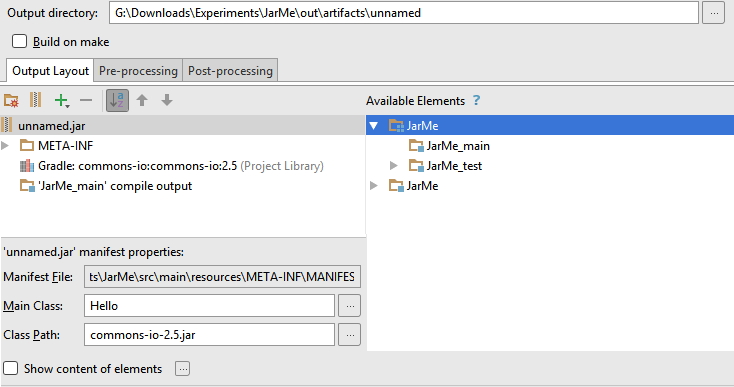
java Cannot run jar file Could not find or load main class Hello from stackoverflow.com
To create an publish artifact and assign it to a configuration you can use the following syntax: This jar should be published using a classifier. The output will look like this:
Each Instance Of Artifact Is Produced By A Org.gradle.api.task And Potentially Consumed By.
The gradle artifactory plugin allows you to deploy your build artifacts and build information to artifactory and also to resolve your build dependencies from artifactory. 'java' repositories { mavencentral() } dependencies { implementation group:. Artifactkind) defines a type of artifact handled by the android gradle plugin.
You Can Open Command Line, Navigate To Build/Libs.
No artifact (jar) has been. $ gradle init select type of project to generate: Perhaps it got better in the meantime.
Create The Jar With This Command:./Gradlew Shadowjar See Shadow Documentations For More Information About Configuring The Plugin.
When the configuration is resolved, gradle needs to download the guava jar and minify it. Click , point to jar and select from. From the main menu, select file | project structure ( ctrl+alt+shift+s) and click artifacts.
For Each Configuration In Your Project, Gradle Provides The Tasks Uploadconfigurationname And Buildconfigurationname.
Ide will not create jar artifacts automatically based on build.gradle files. From inside the new project directory, run the init task using the following command in a terminal: This jar should be published using a classifier.
Executing Following Has Uploaded Build Info Only.
Let's start with a simple build.gradle file for a java project with two dependencies: Open your build.gradle file and make sure it starts with the following: You can define a jar artifact in the module settings (or.


Comments
Post a Comment